

Long-distance moving is a major life or business event that requires careful coordination, detailed planning, and the right resources to execute successfully. Whether you are relocating your household or transferring an entire office, the process involves much more than simply packing and transporting items. Many individuals and businesses rely on experienced long distance moving companies to manage logistics and ensure a smooth transition.
According to recent industry statistics, nearly 38% of long-distance moves encounter unexpected delays or additional costs due to insufficient planning, while properly organized moves are significantly more efficient and less stressful. This highlights the importance of preparation, budgeting, and selecting the right moving strategy.
Long distance moving tips are essential because, unlike local moves, long-distance relocations involve greater distances, complex logistics, and stricter regulations. Residential moves focus on personal belongings and family needs, while commercial moves require careful handling of equipment, data, and timelines to reduce disruptions. Understanding these differences and planning ahead ensures a smooth and successful move.
Understanding Long Distance Moves
➥ What Qualifies as a Long Distance Move?
A long-distance move is generally defined as any relocation that exceeds 100 miles or involves crossing provincial or state boundaries. In countries like Canada, this often includes intercity or interprovincial moves, which require additional planning and coordination.
These moves involve various logistical considerations such as transportation routes, fuel costs, delivery schedules, and compliance with regulations. Unlike local moves that are usually completed within a day, long-distance relocations may take several days or even weeks depending on the distance and complexity.
Understanding these factors helps individuals and businesses prepare better and choose the most suitable long distance moving options.
➥ Key Differences Between Residential and Commercial Moves
Residential and commercial moves differ significantly in terms of scale, complexity, and requirements. Residential moves typically involve household items such as furniture, appliances, and personal belongings. The focus is on safety, organization, and convenience for the family.
Commercial moves, on the other hand, involve office furniture, machinery, and sensitive data. These moves require specialized equipment, experienced staff, and detailed planning to ensure minimal disruption to business operations. Time sensitivity is also a critical factor, as businesses aim to resume operations as quickly as possible.
Understanding these differences is essential when applying effective tips for moving long distance.

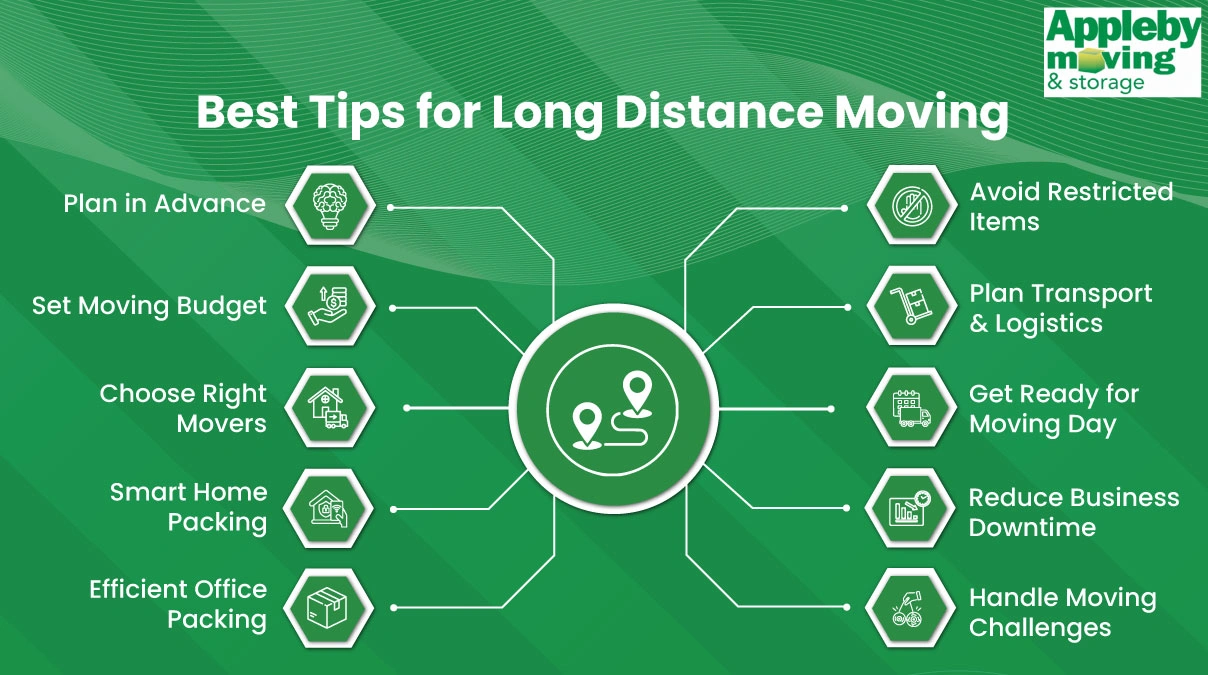
Best Tips for Long Distance Moving
1. Plan Your Move in Advance
✦ Create a Detailed Moving Timeline
Creating a detailed moving timeline is one of the most effective long distance moving tips you can follow. Long-distance relocations involve multiple stages, and without proper planning, tasks can quickly become overwhelming. Start by setting your moving date and then break down the process into manageable steps, such as decluttering, packing, hiring movers, and final preparations.
A timeline allows you to allocate enough time for each task and helps avoid last-minute stress. For residential moves, this might include organizing household items room by room. For commercial relocations, timelines should include coordinating with departments, scheduling IT disconnections, and preparing equipment.
Planning ahead also gives you enough time to explore various long distance moving options, compare services, and secure bookings. This level of organization ensures a smoother transition and reduces the likelihood of unexpected complications.
✦ Book Movers Early
Booking movers early is essential, especially when working with reputable long distance moving companies. These companies often have busy schedules, particularly during peak seasons such as summer and month-end periods. Securing your booking in advance ensures availability and gives you more flexibility in choosing your preferred moving date.
Early booking also allows you to research companies thoroughly, compare pricing, and evaluate service quality. Whether you choose full-service movers or alternatives like long distance moving pods, making reservations early helps avoid delays and last-minute decisions that could impact your move.
Additionally, early planning provides time to communicate your specific needs to the movers, ensuring they are fully prepared for your relocation.
✦ Prepare a Checklist
A moving checklist is a simple yet powerful tool that keeps your entire process organized. It acts as a step-by-step guide, helping you track tasks such as packing, updating your address, transferring utilities, and confirming moving arrangements.
For businesses, a checklist should include notifying employees, coordinating with vendors, and preparing office equipment for transport. Following structured tips for moving long distance ensures that every detail is accounted for and nothing is overlooked.
A checklist not only improves efficiency but also reduces stress by giving you a clear sense of progress throughout the move.
2. Set a Realistic Moving Budget
✦ Estimate Transportation and Labour Costs
Budgeting is a crucial aspect of any long-distance move. Transportation and labor costs typically make up the largest portion of your expenses. These costs depend on factors such as distance, volume of items, and the type of services you choose.
Exploring different long distance moving options, such as full-service movers, DIY trucks, or container services—helps you determine what best fits your budget and needs. Understanding these costs in advance allows you to plan more effectively and avoid financial surprises.
✦ Include Packing Materials and Insurance
Packing materials are often underestimated when calculating moving costs. Items such as boxes, packing tape, bubble wrap, and protective covers are essential for safeguarding your belongings.
Insurance is another important factor to consider, especially when working with professional long distance moving companies. It provides coverage in case of damage or loss during transit. Investing in proper materials and insurance ensures peace of mind and protects your valuables.
✦ Account for Unexpected Expenses
Unexpected expenses can arise even with careful planning. Delays, additional storage needs, or last-minute changes can increase costs. Setting aside a contingency budget helps you handle these situations without stress.
These practical long distance moving tips tricks ensure that you are financially prepared for any surprises that may occur during your move.
3. Choose the Right Moving Company
✦ Check Reviews and Credentials
Choosing the right moving company is critical for a successful relocation. Start by researching online reviews, ratings, and testimonials to evaluate the reputation of different long distance moving companies.
Look for companies with proven experience and positive customer feedback. Checking credentials ensures that the company meets industry standards and operates legally.
✦ Compare Multiple Quotes
Obtaining quotes from several companies allows you to compare pricing, services, and overall value. This helps you make an informed decision based on your budget and requirements.
While cost is important, it’s equally essential to consider service quality and reliability when choosing a provider.
✦ Verify Insurance and Licensing
Hiring a licensed and insured long distance moving company ensures that your belongings are protected and the company complies with regulations.
Always verify documentation before finalizing your decision. This step adds an extra layer of security and ensures a professional moving experience.
4. Smart Packing Strategies for Residential Moves
✦ Declutter Unnecessary Items
Decluttering before packing is one of the simplest yet most effective tips for long distance moving. Removing items you no longer need reduces the volume of your move, saving both time and money.
You can donate, sell, or recycle unwanted items, making your new space more organized and clutter-free.
✦ Use High-Quality Packing Materials
Using strong and durable packing materials is essential for protecting your belongings during transit. Fragile items should be wrapped carefully with bubble wrap or packing paper.
High-quality materials reduce the risk of damage and ensure that your items arrive safely at your destination.
✦ Label Boxes Clearly by Room
Labeling boxes with their contents and destination rooms simplifies the unpacking process. It helps movers place boxes in the correct areas and allows you to find essential items quickly.
This small step can significantly improve efficiency and organization during your move.
5. Efficient Packing for Commercial Moves
✦ Organize Files and Documents
For businesses, organizing files and documents is critical. Proper labeling and categorization ensure easy access after the move.
Digital backups are also recommended to protect important data and prevent loss during relocation.
✦ Secure IT Equipment Properly
IT equipment such as computers and servers requires special care during transport. Use protective materials and label cables to ensure easy setup at the new location.
Proper handling of equipment is essential for maintaining business continuity.
✦ Assign a Move Coordinator
A move coordinator plays a key role in managing the relocation process. This person ensures clear communication between employees and movers, oversees schedules, and addresses any issues that arise.
For commercial moves, having a coordinator is essential for maintaining efficiency and minimizing disruptions.
6. Know What Not to Pack
✦ Hazardous Materials
Hazardous materials such as chemicals and flammable substances are not allowed during moves. These items pose safety risks and must be handled separately.
✦ Perishable Items
Perishable goods should not be packed, as they can spoil during transit and create hygiene issues. It’s best to use or dispose of these items before moving day.
✦ Important Personal or Business Documents
Keep essential documents with you instead of packing them. This ensures they remain safe and accessible throughout the move.
Also Read : Top 10 Commercial Moving Company in Milton for Business Relocation
7. Plan Transportation and Logistics
✦ Choose Between Full-Service or DIY Moving
There are several long distance moving options available, including full-service movers, DIY truck rentals, and long distance moving pods. Each option offers different benefits depending on your needs and budget.
Full-service movers provide convenience, while DIY options offer more control. Pods combine flexibility and affordability, making them a popular choice.
✦ Understand Delivery Timelines
Long-distance moves typically come with estimated delivery windows rather than exact dates. Understanding these timelines helps you plan your arrival and schedule accordingly.
✦ Opt for Tracking Services if Available
Many companies offer tracking services that allow you to monitor your shipment in real time. This feature provides peace of mind and keeps you informed throughout the process.
8. Prepare for Moving Day
✦ Keep Essentials Easily Accessible
Pack a separate bag with essential items such as clothing, toiletries, and important documents. This ensures you have everything you need during the transition.
✦ Supervise Loading and Unloading
Being present during loading and unloading ensures that your belongings are handled properly. Clear communication with movers helps prevent misunderstandings.
✦ Conduct a Final Walkthrough
Before leaving your old location, check every room and storage area to ensure nothing is left behind. This simple step can save you from future inconvenience.
9. Minimize Downtime for Commercial Moves
✦ Coordinate with Team Members
Effective communication with your team ensures everyone is prepared for the move. Assign responsibilities to streamline the process.
✦ Backup Important Business Data
Backing up data is essential to protect valuable information during relocation. This step prevents potential losses and ensures continuity.
✦ Schedule Move During Off-Hours if Possible
Scheduling the move outside regular business hours minimizes disruptions and helps maintain productivity. These long distance moving tips tricks are especially useful for businesses.
10. Unpack and Settle Efficiently
✦ Prioritize Essential Items First
Start unpacking with items you need immediately, such as kitchen supplies or office equipment. This helps you settle in quickly and comfortably.
✦ Set Up Utilities and Services
Ensure that utilities like electricity, water, and internet are set up as soon as possible. This is essential for both residential and commercial moves.
✦ Organize Space Systematically
Arrange your belongings in an organized manner to create a functional and comfortable environment. Proper organization makes it easier to adapt to your new space.
11. Handle Common Moving Challenges
✦ Prepare for Possible Delays
Delays can occur due to weather, traffic, or logistical issues. Being prepared and flexible helps you manage these situations effectively.
✦ Inspect Items for Damage
Check your belongings upon arrival and document any damage immediately. This allows you to file claims and resolve issues quickly.
✦ Maintain Communication with Movers
Maintaining clear communication with your movers is essential throughout the process. Working with the best long distance moving services ensures professional support and helps address any challenges efficiently.
For those planning relocations across regions, especially long distance moving Canada, following these detailed strategies will help ensure a smooth, organized, and stress-free moving experience.
Also Read : Trusted Residential Moving Company in Ancaster for Stress-Free Home Relocation
Logistics and Transportation
❐ Choosing the Right Transport Method
Selecting the right transport method depends on your budget and requirements. Full-service movers offer convenience, while DIY trucks provide cost savings.
Hybrid options, such as portable storage containers, combine flexibility and affordability, making them a popular choice for many movers.
❐ Tracking and Delivery Timelines
Understanding delivery timelines is crucial for planning your move. Most companies provide estimated delivery windows rather than exact dates.
Real-time tracking options allow you to monitor your shipment and stay updated throughout the journey.
Settling Into the New Location
● Unpacking Efficiently
Start unpacking with essential items such as kitchen supplies, bedding, or office equipment. Prioritize rooms or departments based on immediate needs.
This approach helps you quickly establish a functional space and reduces the stress of settling in.
● Setting Up Utilities and Services
Ensure that utilities such as electricity, water, and internet are set up before or shortly after your arrival.
For commercial moves, setting up office infrastructure, communication systems, and workstations is essential for resuming operations.
Common Challenges and How to Overcome Them
Long-distance moves can present challenges such as delivery delays, damaged or lost items, and miscommunication with movers. Being prepared for these issues is key to handling them effectively.
Maintain clear communication with your moving company and keep a detailed inventory of your belongings. In case of damage, document the issue and file a claim promptly.
Proper planning and proactive communication can significantly reduce the impact of these challenges.

Planning a Long Distance Move? Let Experts Handle It
Planning a long-distance move requires time, effort, and careful coordination. Working with professionals can simplify the process and ensure a smooth transition.
Experienced movers specializing in long distance moving Canada offer comprehensive solutions tailored to both residential and commercial needs. From packing and transportation to delivery and setup, they handle every aspect of the move with expertise.
By choosing the right professionals, you can save time, reduce stress, and focus on settling into your new space. Book your consultation today and take the first step toward a successful and hassle-free move.